Over the past few years, many homebuyers have struggled to make the numbers work. Home prices climbed, mortgage rates rose, and for a lot of people, buying a home simply didn’t feel within reach. You may have felt the same way.
Now there’s some encouraging news. If you’ve been waiting for a better moment to reenter the market, this fall could be showing early signs of improved affordability.
According to the latest data from Redfin, the typical monthly mortgage payment has been trending down and is now about $290 lower than it was just a few months ago (see graph below).

Here’s what’s driving the change. The cost of buying a home comes down to three key factors:
- Mortgage rates
- Home prices
- Your income
At the moment, all three are starting to move in a more favorable direction. That doesn’t mean buying has suddenly become simple at today’s rates and prices, but it does mean the process is becoming less challenging.
1. Mortgage Rates
Mortgage rates have eased compared to earlier this year. Back in May, they averaged around 7 percent. Today, they are closer to 6.3 percent (see graph below).
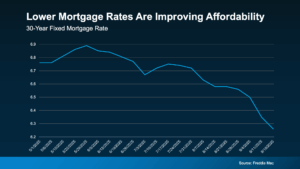
It may not seem like a big change, but it makes a real difference. Even a small shift in mortgage rates can impact your monthly payment. For example, compared to when rates were at 7 percent, taking out a $400,000 mortgage today at 6.3 percent would lower the monthly cost by about $190 based on rates alone.
For many buyers, that kind of savings has been enough to make homeownership possible again. As Joel Kan, VP and Deputy Chief Economist at the Mortgage Bankers Association (MBA), shared on September 10:
“The downward rate movement spurred the strongest week of borrower demand since 2022…Purchase applications increased to the highest level since July and continued to run more than 20 percent ahead of last year’s pace.”
2. Home Prices
After several years of rapid price increases, home price growth has finally started to slow. As Odeta Kushi, Deputy Chief Economist at First American, explains:
“National home price growth remains positive, but muted, in the low single digits. We expect this trend to continue in the second half of the year.”
For buyers, this shift offers some welcome relief. More moderate growth makes it easier to plan your budget, and in certain markets, prices have even dipped slightly. If you are looking in one of those areas, you may discover options that are more affordable than you expected.
3. Wages
The Bureau of Labor Statistics (BLS) reports that wages are rising at nearly 4 percent annually. Lawrence Yun, Chief Economist at NAR, highlights why this matters right now:
“Wage growth is now comfortably outpacing home price growth, and buyers have more choices.”
In other words, paychecks are growing faster than home prices, which helps improve affordability. The difference may not be dramatic, but in today’s market, every bit of progress makes an impact.
What This Means for You
Lower mortgage rates, slower home price growth, and stronger wages could be just enough to make the numbers work in your favor this fall.
Affordability is still a challenge, but buying a home is a bit easier on the wallet today than it was just a few months ago. In fact, Redfin reports that the typical monthly mortgage payment is already about $290 lower than it was earlier this year.
Bottom Line
Have you been thinking about whether it’s worth taking another look at buying?
Let’s review the numbers together. We can go over your budget, see what has shifted, and determine if this fall could be the right time to turn window shopping into unlocking the door to your new home.