For more than a year, headlines have warned that home prices were headed for a crash. But the latest housing data tells a different story. Home price growth appears to be gaining momentum again, and that shift could have important implications whether you're planning to buy or sell.
The Numbers May Be Starting To Turn
For the past couple of years, home price growth has gradually cooled, falling from roughly 7% in mid-2024, according to Redfin (see graph below). But if you look at the far right of the graph, you'll notice an important shift. Price growth appears to have reached its low point and is beginning to trend upward again.
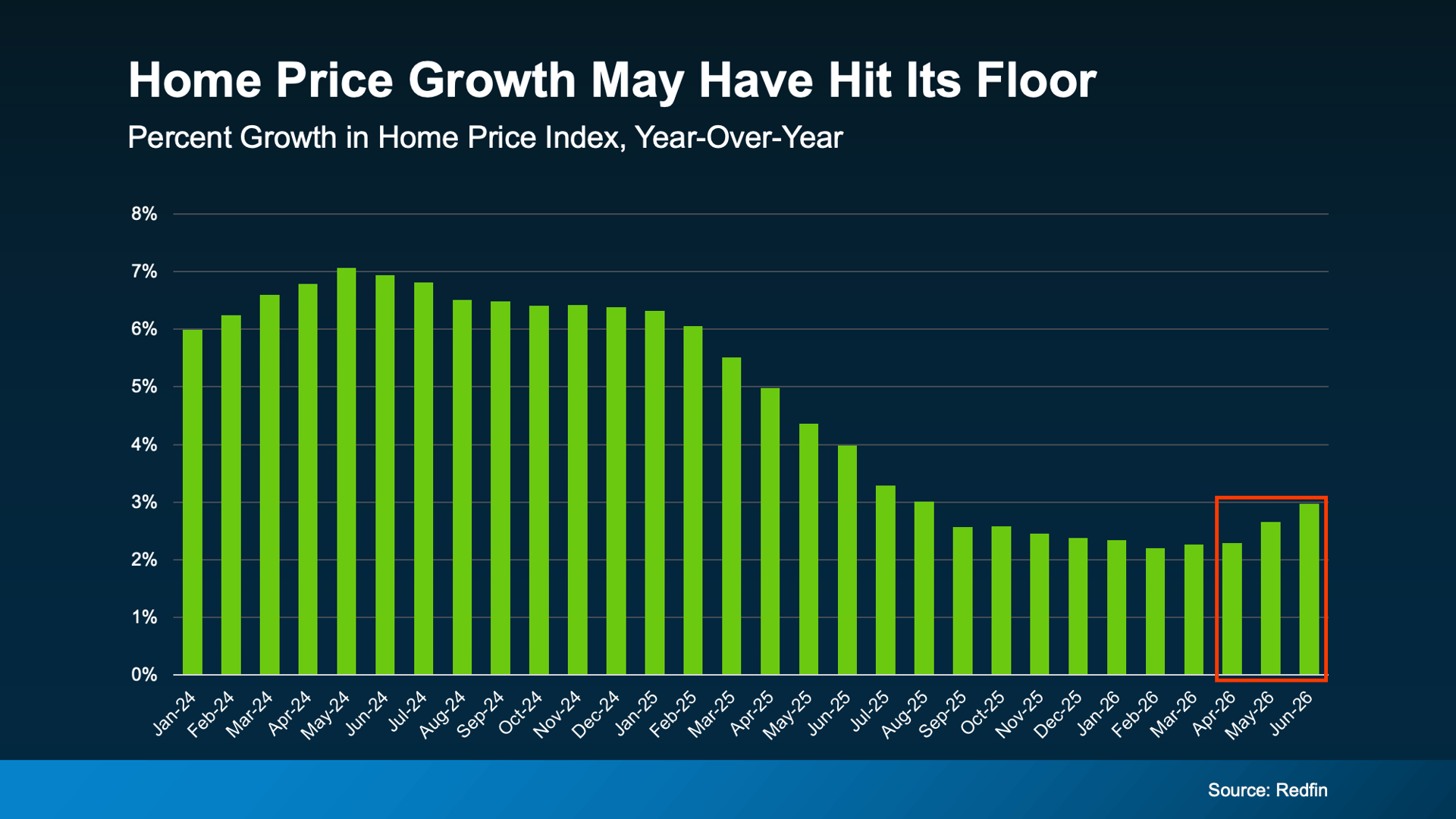
While a few months of data alone don't confirm a long-term trend, other indicators suggest this momentum could continue.
One example is the declining number of markets experiencing falling home prices. Data from ResiClub and Zillow shows that around 36% of the nation's 300 largest housing markets saw price declines by the middle of last year. Since the beginning of this year, that figure has steadily dropped. Today, only 23% of those markets are seeing modest price decreases (see graph below):
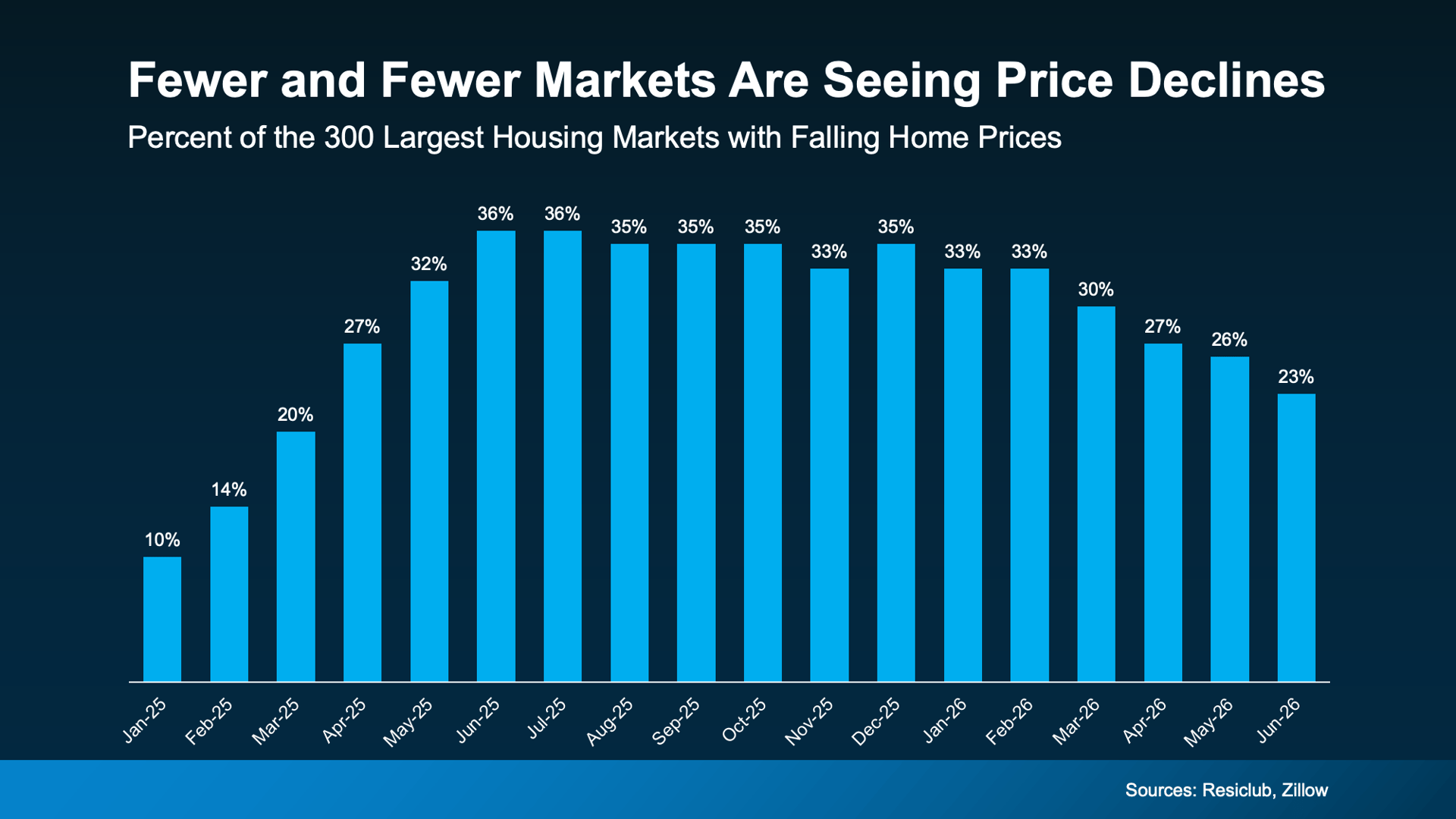
As fewer markets experience price declines, more areas are beginning to see home values rise again.
Forecasts also point to continued momentum. On average, economists expect home prices to increase by about 2.3% nationwide this year. To reach that projection, price growth would need to strengthen modestly during the second half of 2026.
But Remember, Real Estate Is Local
While national home prices appear to be gaining a little momentum, that doesn't necessarily reflect what's happening in your local market.
National figures are simply an average of hundreds of housing markets across the country. Some areas are seeing stronger price growth, while others continue to cool. One reason the national average is trending upward is that more local markets are beginning to post positive price growth.
Not long ago, the nation's major metros were nearly evenly divided, with about half experiencing price increases and half seeing prices decline. That balance is now shifting. According to Redfin, more than half of the largest metro areas recorded home price gains last month (see graph below):
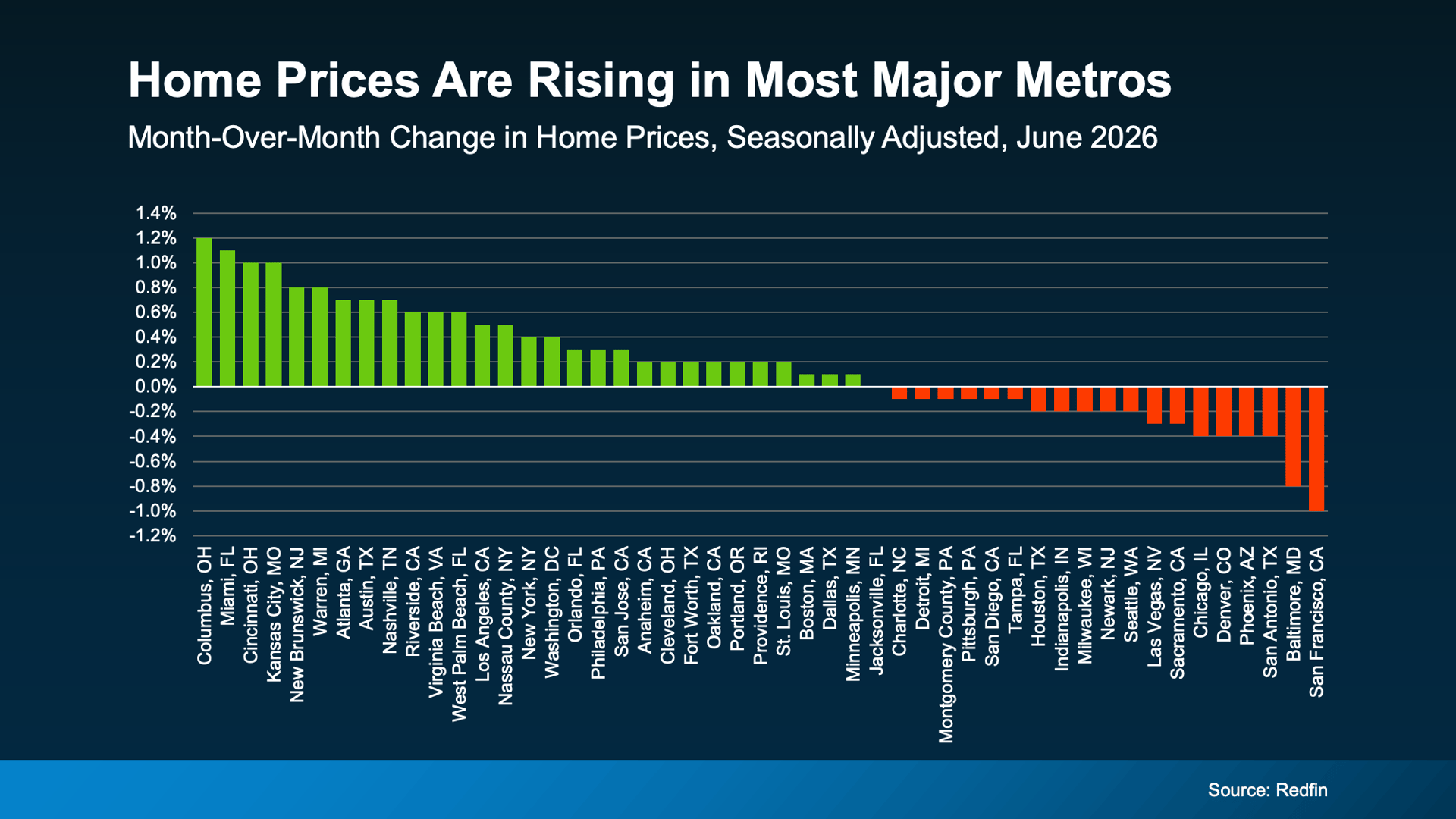
As Selma Hepp, Chief Economist at Cotality, explains:
". . . local markets continue to tell very different stories. Annual home price growth has changed little since the start of the year, but some markets, especially those supported by strong job and income growth in the West and more affordable Midwest markets, have seen notable acceleration in price gains."
What This Means for You
National headlines don't always reflect what's happening in your local housing market. That's why working with a knowledgeable real estate agent is so important. They can help you understand local trends and what current market conditions could mean for home prices in your area.
Having that insight can help you make a more informed decision and stay ahead of changing market conditions.
If you're buying, the recent slowdown in price growth has likely given you more negotiating power and greater confidence in planning your budget. But if home prices are beginning to gain momentum where you live, purchasing sooner could mean paying less than you would later this year.
If you already own a home, you've continued building equity even as home price growth slowed. If prices keep gaining momentum, your equity could grow even faster. Lawrence Yun projects that the typical homeowner will add about $16,000 in housing wealth this year. And if selling has been on your mind, that's an encouraging sign. Just keep in mind that many local markets remain balanced, giving buyers solid negotiating power.
Home price appreciation may be starting to accelerate again after a period of slower growth. Whether you're planning to buy or sell, let's connect to discuss what's happening in our local market and how these trends could impact your next move.
Bottom Line
Home price growth may be gaining momentum again after a period of slower appreciation. Whether you're buying your next home or thinking about selling, let's connect to discuss what's happening in our local market and how these trends could influence your next move.