Few things are more stressful for a seller than having a home sale fall apart at the last minute, just when closing is within reach. After all the time, effort, and anticipation, losing the deal can feel like starting over.
But if you're preparing to sell, there's some reassuring news. Even in today's market, most home sales make it to the closing table. Buyers who are purchasing at today's prices and mortgage rates are often doing so because a major life change has made the move necessary. That means they're typically motivated to see the transaction through.
According to the latest Redfin data, only about 1 in 7 pending home sales falls through, meaning the overwhelming majority successfully reach closing.
And the biggest factor that can put a deal at risk is also one you can do a lot to prevent. A little preparation before your home hits the market can go a long way toward keeping your sale on track.
Why Some Deals Fall Apart Before Closing
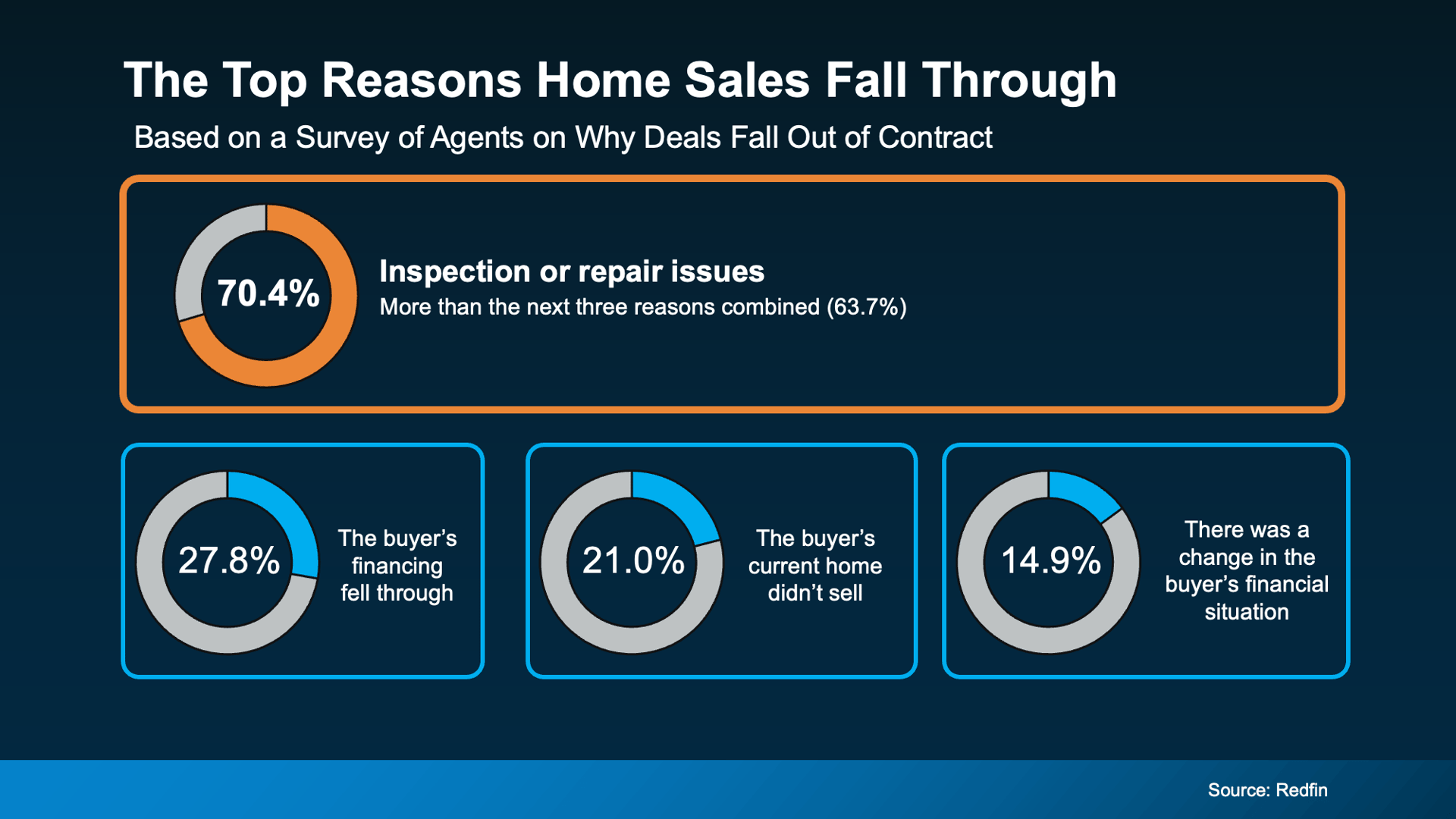
A recent Redfin survey highlights some of the most common issues that can cause a home sale to fall apart (see visual below):
Here’s a closer look at each of these issues and what you can do to help keep your sale on track.
- Inspection or repair issues. This is one of the biggest potential hurdles. If a buyer's inspection uncovers a problem with the roof, plumbing, foundation, or another major system, they may ask you to make repairs, request a credit to handle the work themselves, or negotiate a lower price. If you can't reach an agreement, the buyer may decide to walk away.
- The buyer's financing falls through. A buyer's mortgage needs to be fully approved in time for closing. If their financing isn't finalized, the transaction can't move forward, even if everything else is in place.
- The buyer's current home doesn't sell. Some buyers need the proceeds from their existing home to purchase yours. If their sale takes longer than expected, it can create delays, disrupt your timeline, or cause them to reconsider the move.
- The buyer's financial situation changes. A new job, significant purchase, or additional debt can affect what a buyer qualifies for, even if they were already pre-approved. Changes in their finances can create unexpected complications before closing.
Where Your Agent Makes the Difference
Some of these factors are beyond your control, such as whether a buyer's financing is approved or their current home sells on schedule. But according to Zillow, there are several proactive steps you can take to reduce potential problems and help keep your sale moving smoothly:
- Consider getting a pre-listing inspection. A pre-listing inspection allows you to identify potential problems before a buyer's inspector finds them. That gives you time to address important repairs or disclose issues upfront, rather than having to react to unexpected requests once you're under contract. Your agent can help you determine which items are worth fixing and which are better handled through disclosure. Taking care of potential surprises early can help reduce one of the biggest risks to your sale before you even receive an offer.
- Look beyond the offer price. The highest offer isn't always the strongest one. Your agent can help you evaluate the full terms, including the buyer's timeline, contingencies, and financing. If an offer depends on the buyer selling their current home first, your transaction becomes dependent on another sale going smoothly. In some cases, a slightly lower offer with fewer conditions may provide greater certainty. Your agent can help you compare the options and choose the offer that best fits your priorities.
One of these strategies only comes into play once you have offers to evaluate. The other is something you can take care of before your home ever hits the market: a pre-listing inspection.
That relatively small upfront expense could save you from a much bigger headache if an unexpected issue threatens your sale later. Of course, a pre-listing inspection isn't the right move for every home or market. Your agent can help you decide whether it makes sense based on local conditions, your property's age and condition, and what buyers are looking for in your area.
Sometimes, the smartest way to protect your sale is to get ahead of potential problems before they have a chance to become deal-breakers.
Bottom Line
Most home sales successfully make it to closing, and the biggest risk to yours may be something you can take steps to prevent.
With the right preparation and a thoughtful strategy, you can put your sale in the strongest position possible from the start. Let's connect and make a plan to get your home sold with confidence.