Ask a few people how they think the housing market is doing right now, and you're likely to hear very different answers. That's because today's market is behaving differently depending on the price range.
Understanding which part of the market your home falls into can make a major difference when you're selling. It can influence everything from setting the right asking price to knowing how long it may take to attract an offer. Here's what you need to know.
Home Sales Are Picking Up Speed at the Top of the Market
The impact of mortgage rates and buyer competition isn't the same across every price range. Recent sales data from the National Association of Realtors (NAR) makes that difference clear.
Sales of homes priced below $250,000 declined by 2-3% compared to last year. Meanwhile, sales of homes priced above $750,000 increased by double digits (see graph below):
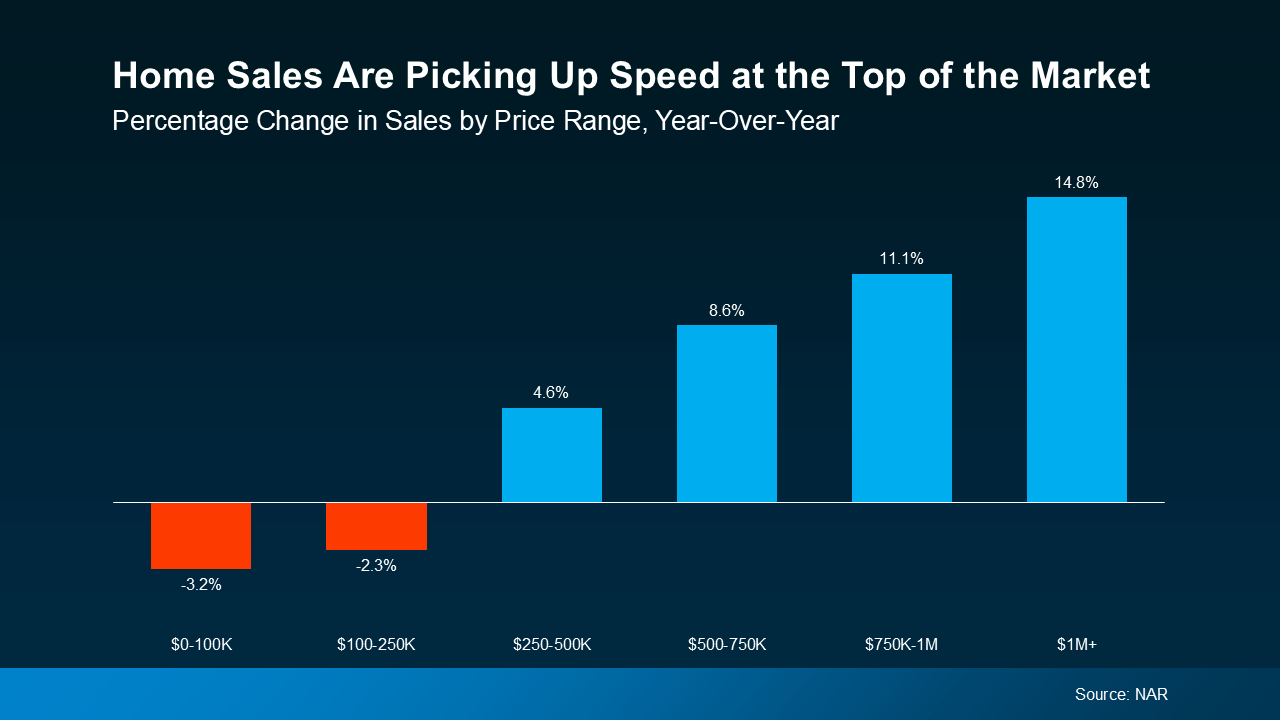
So, what's causing this split? Higher mortgage rates, combined with years of rising home prices, have made it harder for many buyers to afford homes at the entry level, particularly first-time buyers. As a result, demand for lower-priced homes has cooled.
The picture looks different at the higher end. Buyers shopping for more expensive homes are often less affected by elevated rates because they have more flexibility in their budgets. A strong stock market and the equity they've built in their current homes can also give them more purchasing power.
That's the key difference. Lower-priced homes are still finding buyers, but they may take longer to sell because today's mortgage rates have reduced the number of people who can afford to make their first purchase.
That makes pricing strategy and presentation especially important when you're selling in this segment. Start with a price that reflects the market rather than testing an inflated number, make sure your home makes a strong impression both online and in person, and work with an agent who can put your listing in front of as many qualified buyers as possible. The goal is to capture the attention of the buyers who are still shopping in your price range and show them why your home is worth the asking price.
Why Some Homes Sit While Others Get Snapped Up
The difference between price ranges isn't just showing up in sales activity. It's affecting how quickly homes are selling, too. For years, luxury properties typically took much longer to sell than starter homes. But according to Redfin, that difference has narrowed significantly and is now close to disappearing (see chart below):
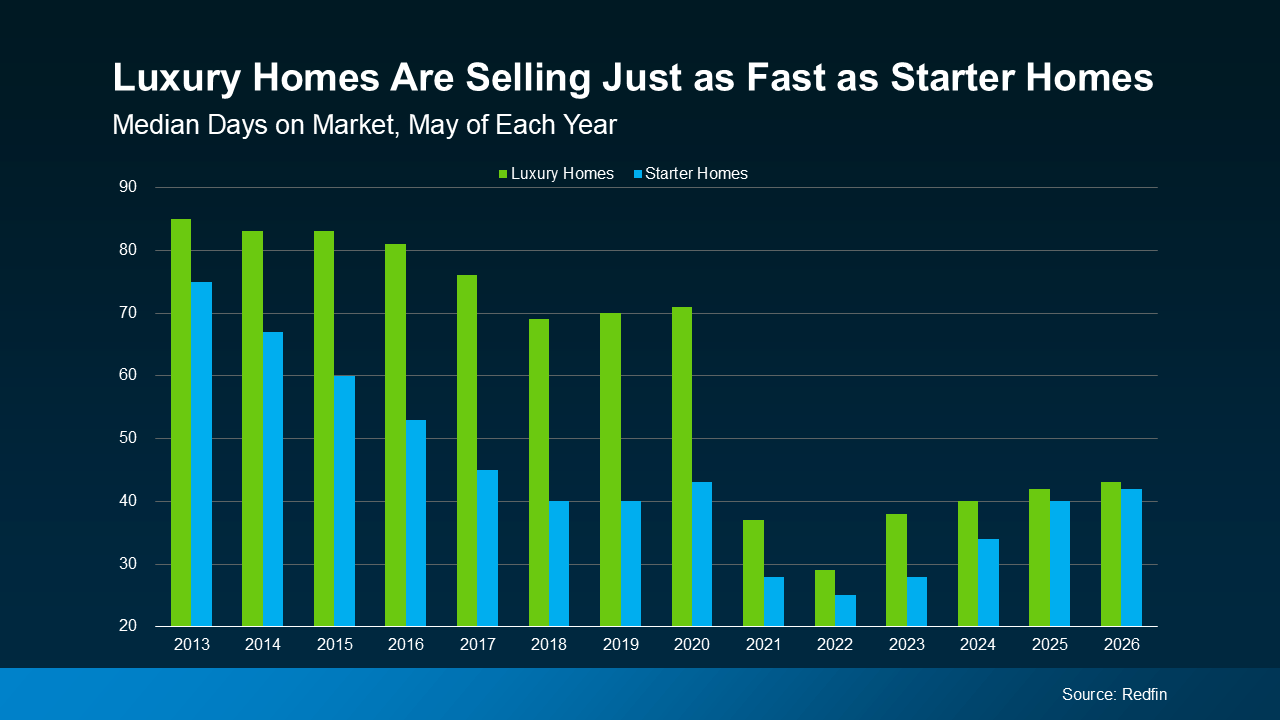
At the higher end of the market, buyers with more purchasing power are acting quickly when a home is priced well and meets what they're looking for. As Zillow puts it:
“The U.S. housing market is splitting in two. Luxury homes are selling at a faster pace than a year ago, with shrinking supply and growing bidding wars.”
If your home falls into this price range, it could attract an offer sooner than you might expect. In some cases, you could even see multiple offers. That level of buyer activity makes it especially important to get your pricing and marketing strategy right from the very beginning.
No matter where your home falls on the price spectrum, knowing what your segment of the market looks like before you list can help you set realistic expectations and put yourself in a stronger position for a smooth sale.
What This Means for Your Sale
If you're considering selling an entry-level home, there's no need to panic. Homes in this segment are still selling, although the process is taking longer than it did last year. That makes getting your price and presentation right even more important.
For those selling a move-up or luxury home, current conditions are more favorable. Buyers in these price ranges tend to be less impacted by today's mortgage rates, which means they're still actively shopping and well-positioned homes can attract meaningful competition.
In either case, where your home falls within the market matters. Your price range can have a major impact on how quickly your home sells and the price it ultimately commands.
Bottom Line
Right now, your home's price range tells you more about your selling outlook than the headlines about the national housing market. Let's take a closer look at where your home fits within today's divided market and create a pricing strategy designed to help you reach the right balance of speed and price.
If you're thinking about selling, don't leave your pricing strategy to chance. Reach out today for a personalized home value and a plan designed around your market and goals.