If you're thinking about buying your next home soon, you've probably heard the familiar advice to save 20% for a down payment.
But here's the thing: you usually don't need that much. There are plenty of loan programs that allow qualified buyers to put down significantly less. Even so, many repeat buyers are still choosing to put 20% down.
Why, if they don't have to?
There are two big reasons. They understand the advantages of making a larger down payment, and after owning their current home for several years, they've built up enough equity to make that bigger down payment possible.
Repeat Buyers Put More Money Down
According to the National Association of Realtors (NAR), the typical repeat buyer puts 23% down when purchasing a home (see graph below):
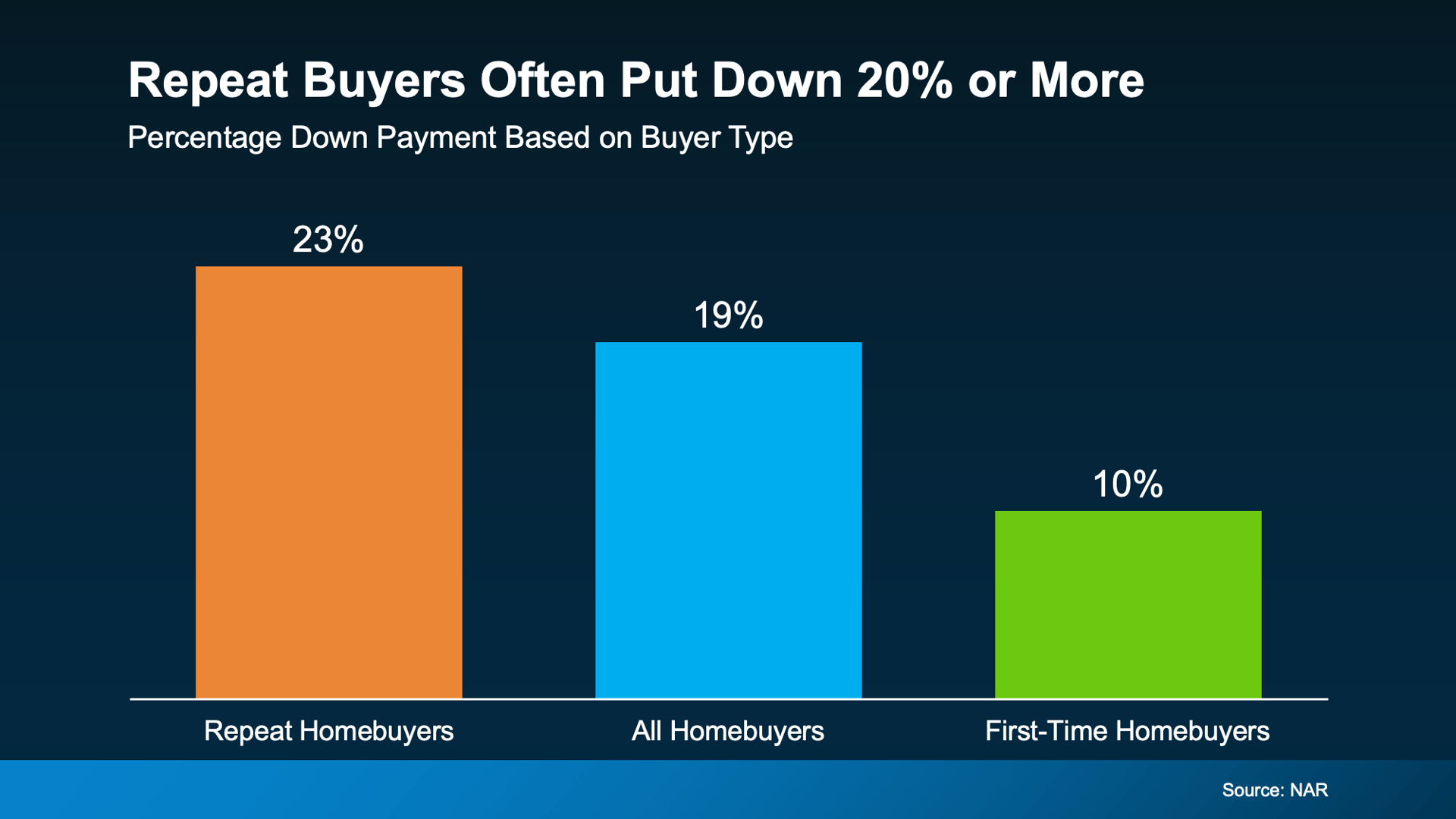
That's more than twice the roughly 10% many buyers put down when they purchased their first home. So how are repeat buyers able to put so much more down? In many cases, it comes down to equity.
After you've owned a home for several years, two things are typically working in your favor. You're paying down your mortgage, while your home may also be increasing in value. The difference between your home's current value and what you still owe on the mortgage is your equity. And the longer you own the home, the more that equity can potentially grow.
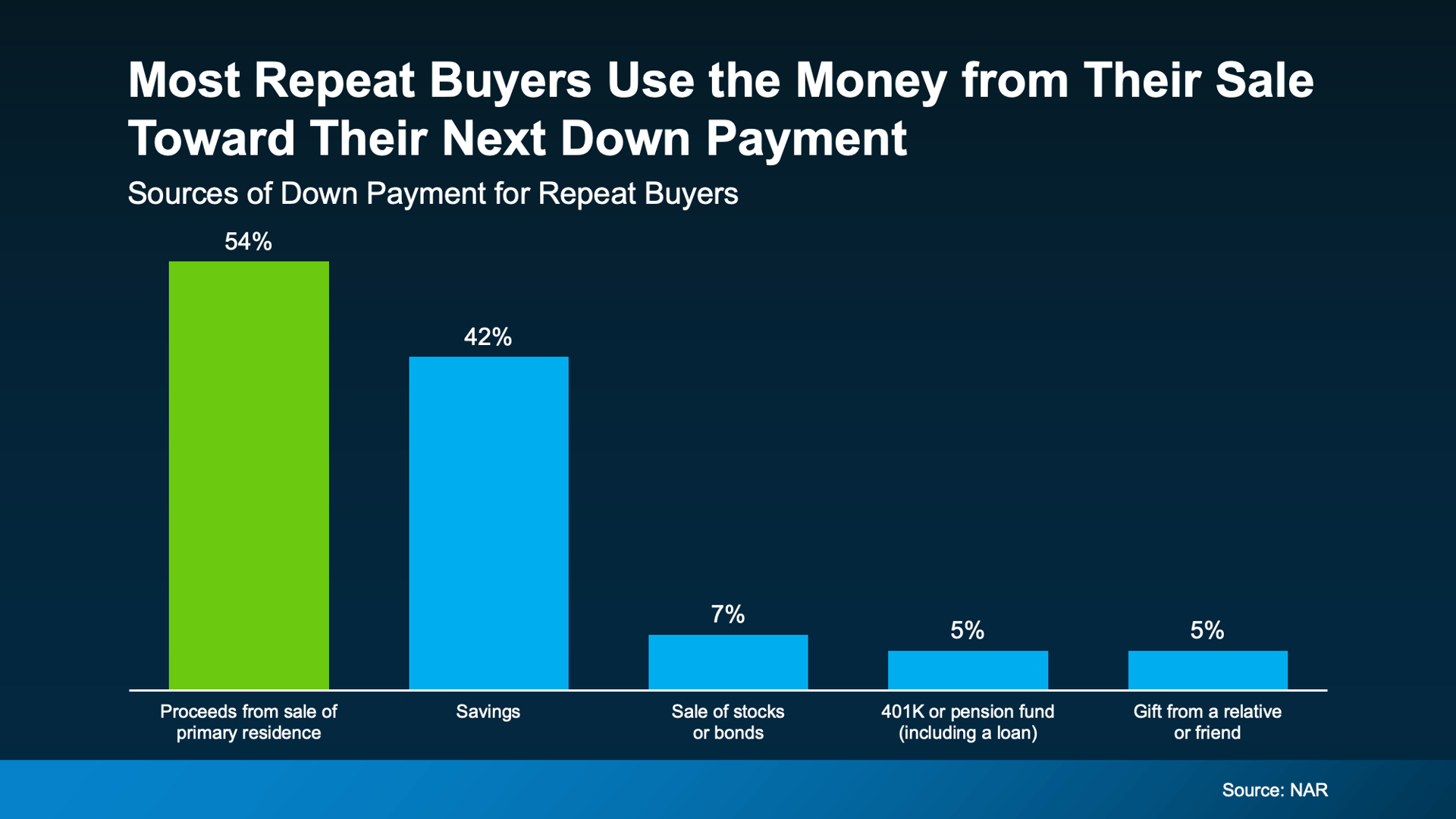
When you sell, that equity can become cash you can put toward your next home. NAR data shows that most repeat buyers use the proceeds from their current home toward the down payment on their next one (see chart below):
First-time buyers don't have that built-in advantage yet, and that's completely normal. But if you already own a home, you may have more purchasing power than you realize thanks to the equity you've built.
And if your equity makes a 20% down payment possible, it's worth taking a closer look at whether that strategy makes sense for you. Here's what you could gain in return.
4 Perks of Putting 20% (or More) Down
As Redfin points out, putting more money down can work in your favor in several important ways:
- A Lower Monthly Payment. The more you put down, the less you need to borrow at today's mortgage rates. And if a higher monthly payment is one of the things making you hesitate about moving, reducing the amount you finance can make the transition more manageable.
- Paying Less Interest. A larger down payment means borrowing less, which can reduce the total interest you pay over the life of your mortgage. With 20% down, you're financing 80% of the home's price. With 5% down, you're financing 95%, meaning more of your money goes toward interest over time.
- No Private Mortgage Insurance (PMI). With a conventional loan, putting down less than 20% typically means you'll have to pay private mortgage insurance each month. Reaching the 20% mark can eliminate that cost, helping you keep more money in your pocket each month.
- A Stronger Offer. A larger down payment can make your offer more appealing to sellers. It may signal that your financing is solid and give the seller greater confidence that the transaction will make it to closing.
Bottom Line
So, no, you don't have to put 20% down to buy your next home. But if your equity makes it possible, it may be worth considering. A larger down payment can reduce your borrowing costs and make your next move feel more manageable, even with today's mortgage rates.
A trusted lender can help you compare your financing options and see what makes sense for your budget. And when you're ready to find out how much equity your current home could contribute toward your next down payment, let's connect.